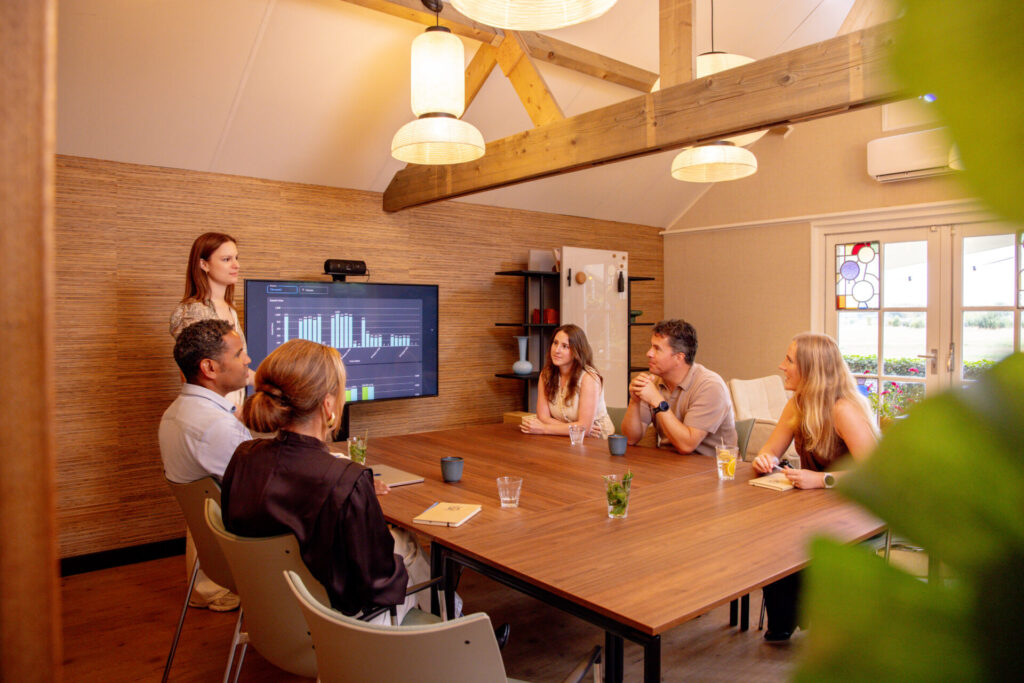
You organize a successful strategy day in four steps: choose a location that completely breaks away from the daily context, limit the group to a maximum of 10 people, formulate one clear final question, and deliberately build breathing room into the program. The choice of location is the first and most decisive decision — everything that follows stands or falls with it.
Most strategy days are organized with good intentions and a full agenda. And yet, at the end of the day, everyone drives home with the same list they arrived with. Not because the team isn't good enough, but because the circumstances made it impossible to make real progress.
This is a practical guide for anyone who wants to organize a strategy day that actually delivers results — from the first decision to the end of the day.
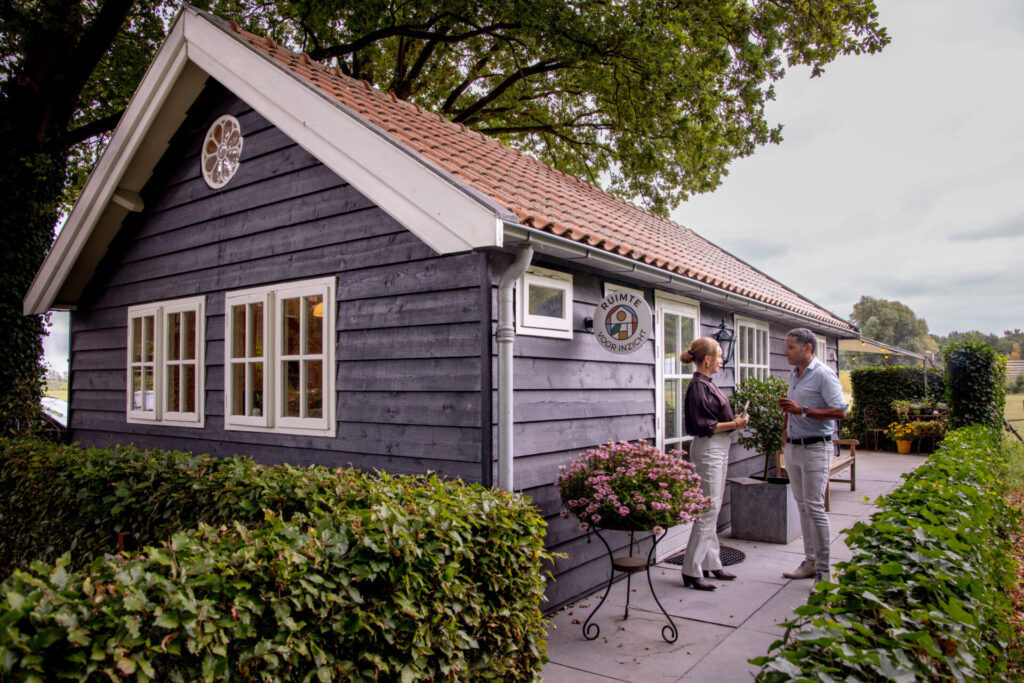
Step 1 — Choose the right location
The location is not the packaging for your strategy day. It is the instrument. An office-like meeting room—even if situated in a beautiful spot—activates office behavior: the same hierarchy, the same patterns, the same inhibitions. The conversations you need do not happen naturally in such an environment.
What you look for in a location:
- Completely private — no other guests, no casual colleagues. One group per day.
- Non-business atmosphere — warm, organic, different from the office. Not neutral.
- Direct access to nature — for walks between sessions. Nature restores cognitive fatigue. Read more about what nature does to the brain.
- Catering arranged — no logistical hassle. Focus on the day itself.
- Transparent pricing structure — know what you are paying before you book. See the Ruimte voor Inzicht rates.
Step 2 — Limit the group size
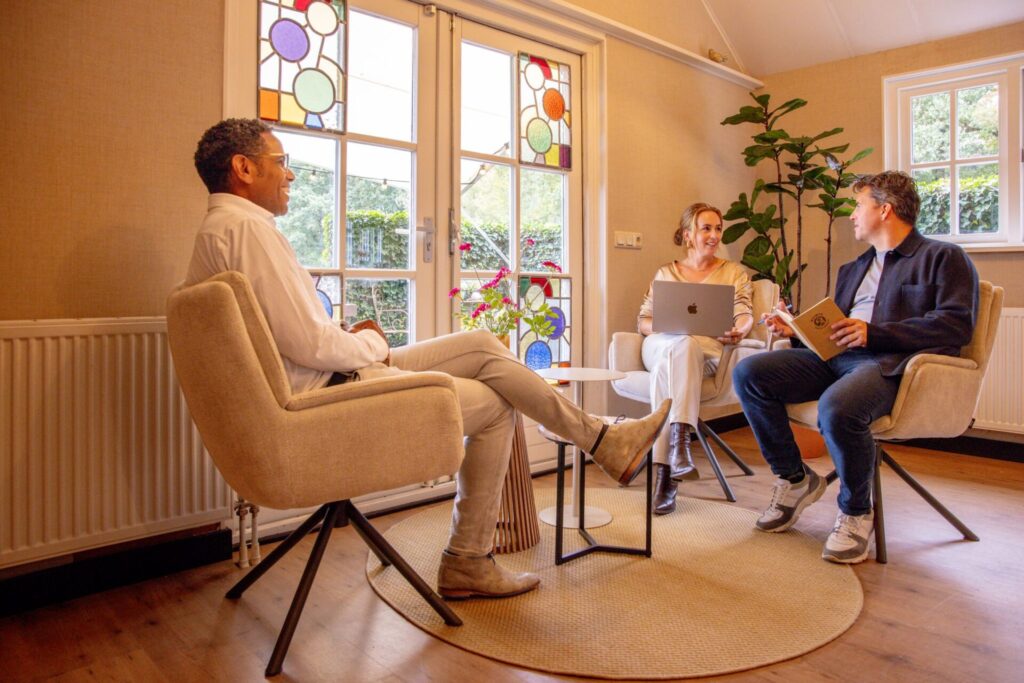
The larger the group, the lower the individual involvement. That is not an opinion, but a scientifically described effect — the Ringelmann effect. With more than 10 people, a group fragments into subgroups, strong voices dominate, and decisions are delayed.
The optimal group size for a strategic retreat is between 5 and 8 people. Maximum 10. Not as a cost-cutting measure, but as a substantive choice. More about why small teams achieve better results.
Is your team larger? Then consider two separate sessions, or work with a core group that makes decisions and a broader group that is informed.
Step 3 — Formulate one clear final question
Most strategy days have an agenda with seven points. Not a single one is truly completed. The reason: without one clear central question, attention constantly shifts to the next topic before the current one has been explored in depth.
Ask yourself one question before the day: What needs to be decided or clear by the end of this day? That is your final question. Everything on the agenda serves that question. Anything that does not contribute to it is moved to a regular meeting.
“A seven-item agenda is not an agenda. It is a list of things that belong on another day.”
Step 4 — Consciously build breathing room into the program

The real conversations do not take place in the formal session. They take place during coffee, a walk, or lunch. The moment someone says: “I actually wanted to speak to you for a moment.”
Consciously schedule those moments. Not as filler, but as part of the day. A 30-minute walk after the morning session is not a waste of time — it is the moment when conversations continue that started at the table.
- Is the location exclusive to our group that day?
- Are we a maximum of 10 people?
- Do we know what we want to have decided by the end of the day?
- Is catering taken care of — no hassle on the day itself?
- Is there breathing room in the program — breaks, a walk, unstructured time?
- Is the travel distance long enough to really feel like you're away?
After the day — securing what you have decided
A strategy day that delivers results does not end at five o'clock. The day yields decisions — and decisions require follow-up. Always conclude the day with three concrete questions:
- What have we decided — and who is responsible for the implementation?
- What do we communicate to the rest of the organization, and when?
- When do we evaluate whether the decisions are having an effect?
Five minutes at the end of the day. Without those five minutes, half of what you have achieved evaporates.
A successful strategy day is not a matter of the right team-building exercise or the perfect facilitator. It is a matter of the right circumstances — and those start with the choice of your location.